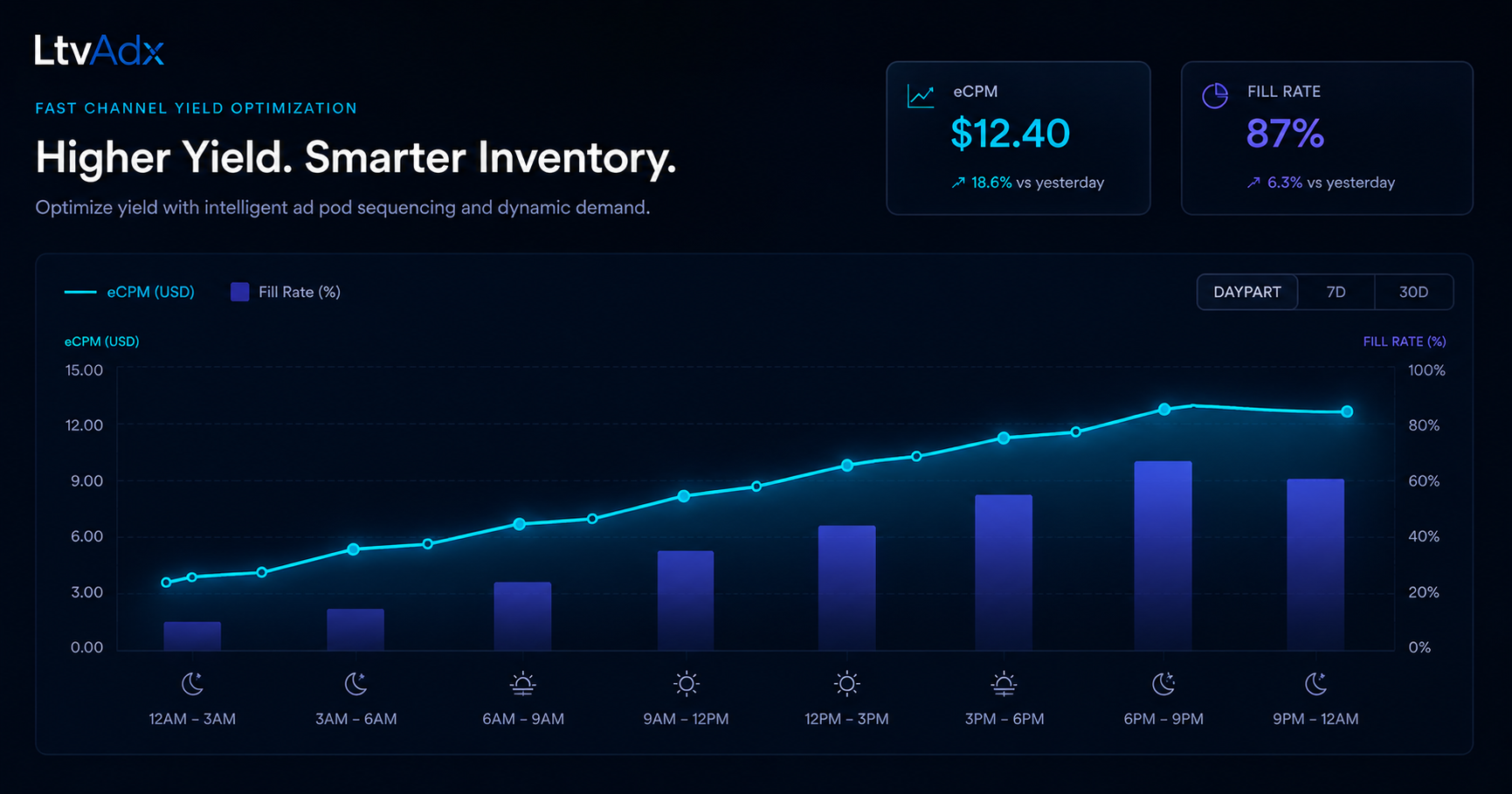
FAST channel operators sit on a structural advantage that most have not fully monetized: a predictable linear schedule, a captive streaming audience, and an ad load ceiling that is largely self-imposed. The gap between the eCPM a well-optimized FAST channel earns and one running default settings is routinely 40–70% on the same underlying inventory. This article covers the yield levers available to FAST operators — floor pricing, demand mix, identity enrichment, and measurement — using the LtvAdx FAST channel platform as the operational reference.
Understanding FAST channel eCPM
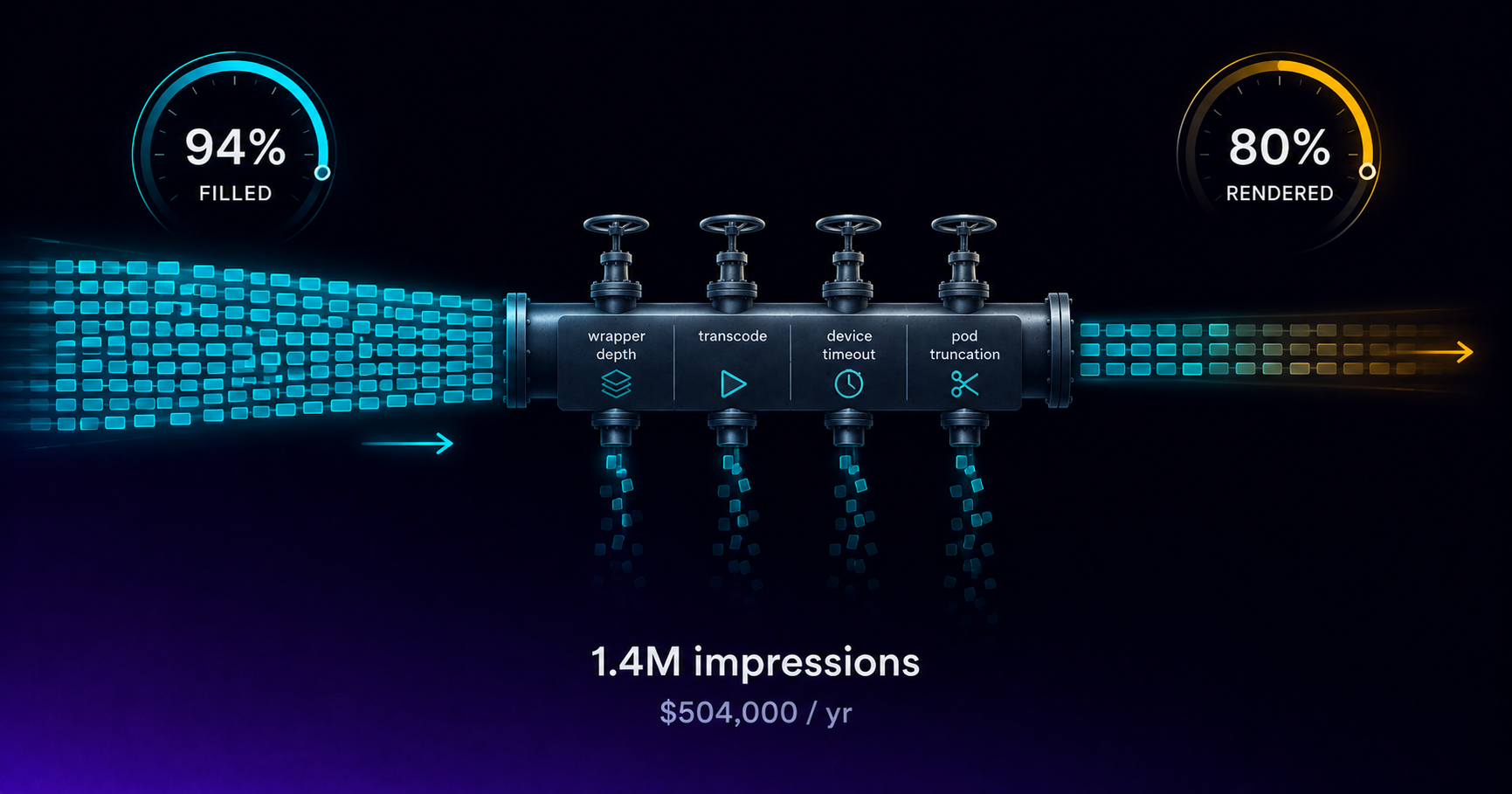
Effective CPM (eCPM) in FAST is the product of fill rate and average clearing CPM across all slots. A channel running 90% fill at $8 CPM earns less than one running 75% fill at $14 CPM. The instinct to maximize fill rate — by lowering floors, accepting all demand sources, and eliminating competitive separation — is counterproductive above a threshold. Yield optimization in FAST is about finding the fill-rate and CPM combination that maximizes revenue per hour of viewing while sustaining viewer retention.
The most important variable in this equation is demand quality. Not all fill is created equal: a remnant open auction impression at $3 CPM filling a slot that a PMP deal would have cleared at $11 is a failure of waterfall management, not a fill rate success. Map your demand waterfall explicitly — direct IO, programmatic guaranteed, PMP, open auction, house — and set floors at each tier that force demand upward before settling for remnant backfill.
Waterfall and demand priority architecture
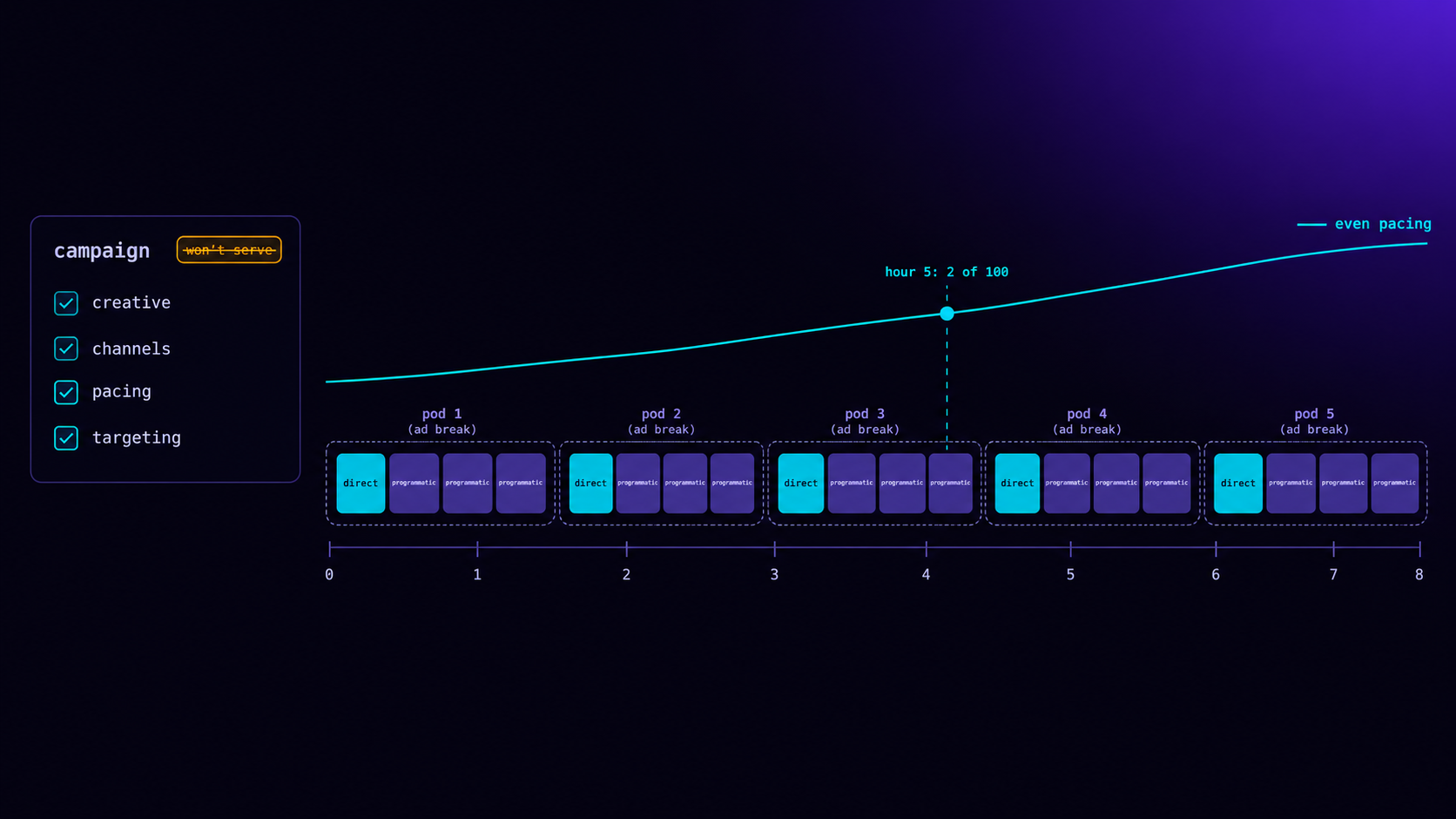
The LtvAdx ad server processes demand in priority order: direct-sold campaigns run first at their contracted CPM, programmatic guaranteed deals run at guaranteed rate against reserved inventory, PMP deals run next as preferred auction participants, and open auction demand fills remaining slots. House promos or slates fill anything that does not clear the open auction floor.
The most common waterfall mistake is failing to set PMP floors independently from open auction floors. If your PMP deals have no floor protection and open auction demand can win PMP-tagged inventory at $3, buyers quickly learn they do not need to commit to PMP rates. Set PMP floors at or above your deal rate floor to preserve deal value. Open auction floors can be lower but should reflect the true minimum you are willing to accept for inventory that has already been offered to preferred demand and not taken.
For addressable FAST inventory, the waterfall gains a household targeting premium tier. Inventory that carries household segment data — from operator subscriber enrichment or HouseholdID graph matching — consistently clears at significantly higher CPMs in both PMP and open auction than anonymous inventory. Configuring identity enrichment before running demand is one of the fastest yield improvements available to operators.
Floor price strategy by daypart and genre
Static channel-wide floors leave money on the table during high-demand windows and create unnecessary unfill during low-demand windows. Dynamic floor pricing by daypart and content genre is the structural improvement that separates sophisticated FAST operators from those running legacy settings.
Prime-time slots in entertainment and sports genres command the highest CPMs in programmatic FAST. Setting floors 20–30% above your channel average during these windows captures the premium buyers are already willing to pay. During overnight and early morning windows where demand thins, lowering floors to maintain fill prevents dead air without signaling to buyers that your inventory is uniformly cheap. Genre-based floors matter because buyers allocate budget by content category: a sports advertiser willing to pay $18 CPM for live sports will apply that budget specifically to sports inventory, not the same channel's talk programming.
Configure floor schedules in the LtvAdx publisher portal using daypart templates. Apply distinct templates for: prime entertainment (6PM–11PM), daytime (9AM–6PM), overnight (11PM–9AM), live sports events (override schedule), and kids programming (separate compliance rules and lower CPMs reflecting advertiser category restrictions).
Identity enrichment and audience segmentation
Anonymous CTV inventory is increasingly hard to monetize at premium rates. Buyers purchasing through programmatic channels want to know they are reaching target households, not just serving impressions to unknown devices. The LtvAdx HouseholdID system resolves CTV device graphs, IP cohorts, and operator subscriber signals into privacy-safe household segments that can be activated in campaigns without exposing raw PII.
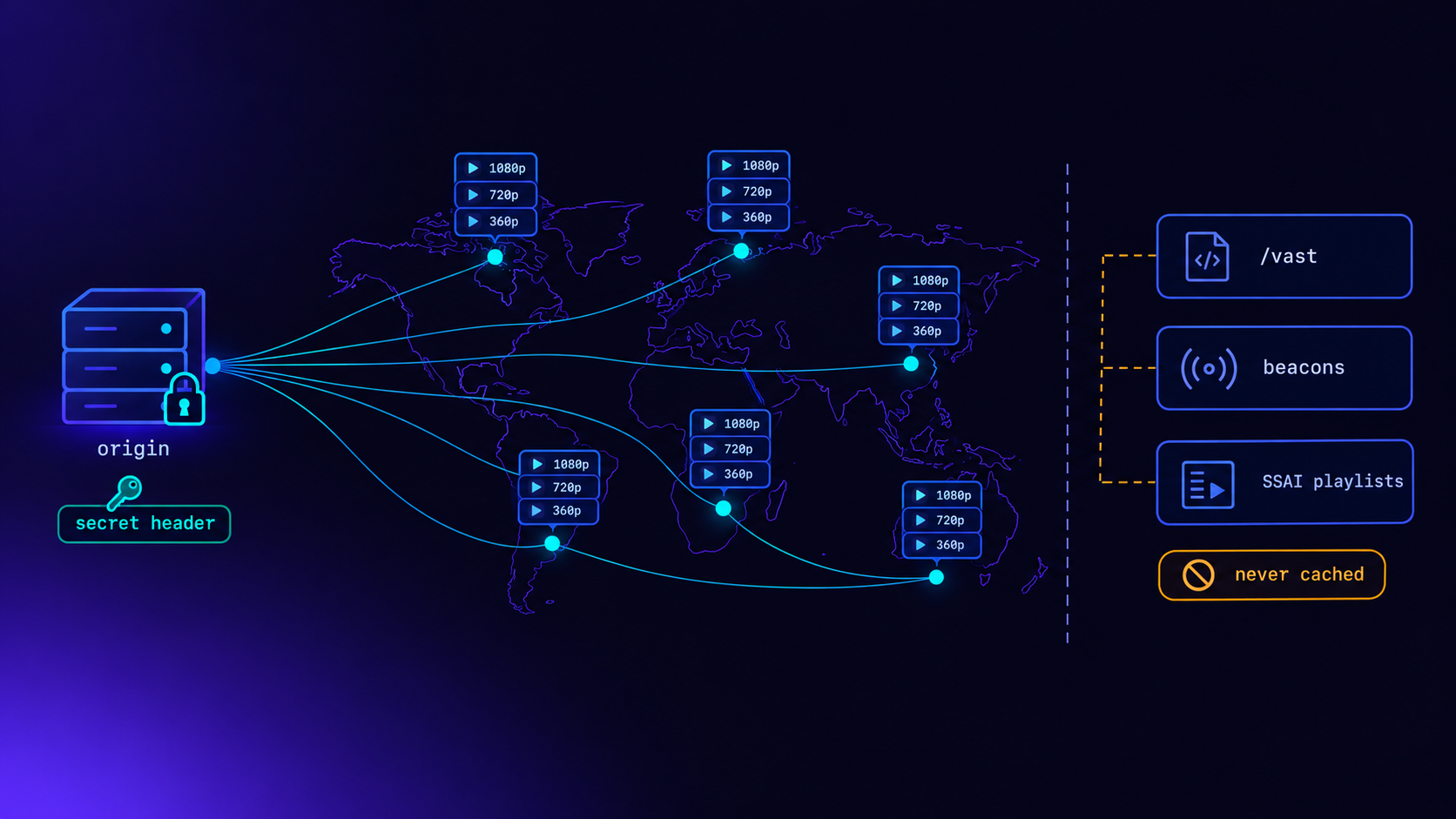
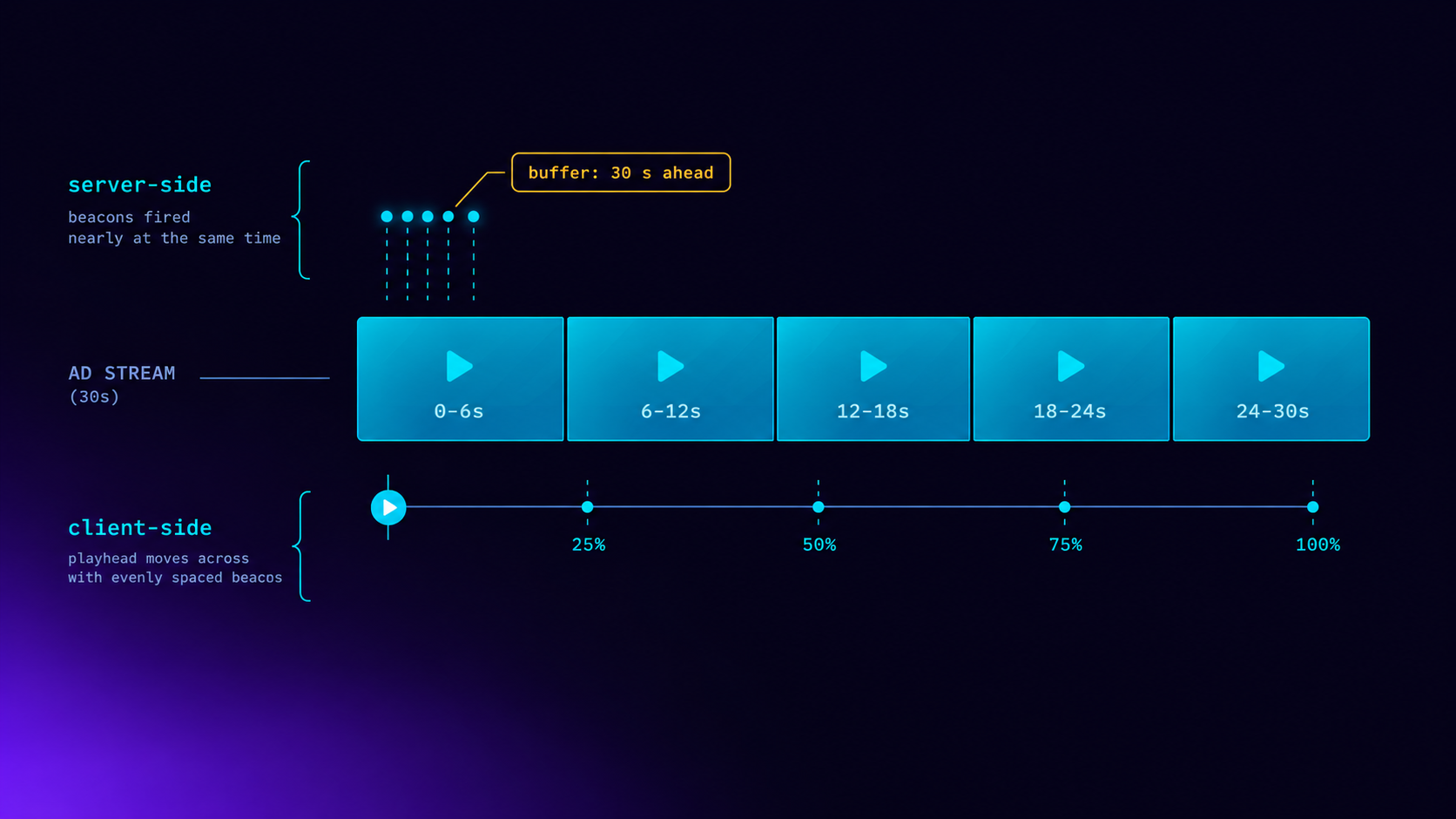
For FAST operators with subscriber sign-ins — even free-tier registrations — first-party identity data is a significant yield driver. Hashed email or phone matches against the HouseholdID graph produce match rates of 40–65% depending on channel demographics, and matched inventory clears at materially higher CPMs than anonymous impressions in direct comparison A/B tests. The implementation requires passing hashed identifiers from your streaming app through the SSAI bid request, which the LtvAdx integration documentation covers end-to-end.
Ad load management
Ad load — the ratio of ad time to content time per hour — is a viewer experience constraint that also affects yield. Counterintuitively, reducing ad load in premium genres often increases per-impression CPM enough to offset the lost slot count. FAST channels that ran from 18 minutes of ads per hour down to 12 minutes while increasing PMP deal penetration have reported eCPM improvements of 25–35% with improved completion rates. The explanation is straightforward: fewer, better-targeted impressions in a less ad-fatigued environment complete more often and earn buyer trust.
The floor for sustainable ad load reduction is the revenue breakeven point relative to your content licensing costs and operating overhead. Model this before cutting load: divide annual content and infrastructure cost by projected viewing hours to get the minimum revenue-per-viewing-hour floor, then work backward from that number to the minimum fill rate and CPM combination your optimized pod structure needs to achieve.
Direct sales and sponsorship packaging
Programmatic fills inventory efficiently but rarely captures the full value of premium FAST programming. Direct sales teams can package inventory that programmatic cannot: genre sponsorships with share-of-voice commitments, live event exclusivities, branded content integrations, and cross-platform deals that combine FAST with digital and social. These deals carry CPMs 3–5x above open auction rates and provide the revenue predictability that makes content investment planning possible.
Direct-sold inventory should be trafficked in the LtvAdx system with campaign priority that preempts programmatic, with competitive separation rules protecting the advertiser's exclusivity, and with reporting that surfaces delivery against IO commitments in real time. For agencies managing multi-client FAST buys, the LtvAdx agency tools provide the multi-seat reporting and campaign management interface that consolidates channel-level and network-level views.
Measuring yield optimization outcomes
Yield optimization without measurement is guesswork. The metrics framework for FAST channel yield should track at minimum: eCPM by daypart and genre, fill rate by demand tier, VCR by slot position, completion rate trends over time, and revenue per viewing hour against target. Monthly reporting cadence is the minimum; weekly is better for channels with sufficient volume.
The LtvAdx reporting dashboard surfaces all of these dimensions with export to the Reporting API for warehouse integration. Set up automated weekly digests to sales leadership and finance with the eCPM and fill rate metrics so yield decisions have organizational visibility rather than living only in ad operations.
For a complete implementation of the above, including waterfall configuration, identity setup, and floor pricing templates, request a walkthrough with the LtvAdx FAST channel team or explore the FAST channel monetization playbook for the broader strategic picture. Publishers already running on the platform should review the SSAI configuration guide to ensure manifest-level settings are aligned with the yield strategy described here.