CTV creative requirements are not a checkbox exercise. The technical specifications exist because television-scale screens, household audio environments, and the absence of skip functionality create a viewing context that is fundamentally different from mobile video or pre-roll. Creative that works on YouTube does not automatically work on a 65-inch display in a living room. Understanding what the format demands — technically and conceptually — prevents the most common creative failures in CTV advertising and helps buyers extract the full brand impact the format can deliver.
Technical specifications: the non-negotiables
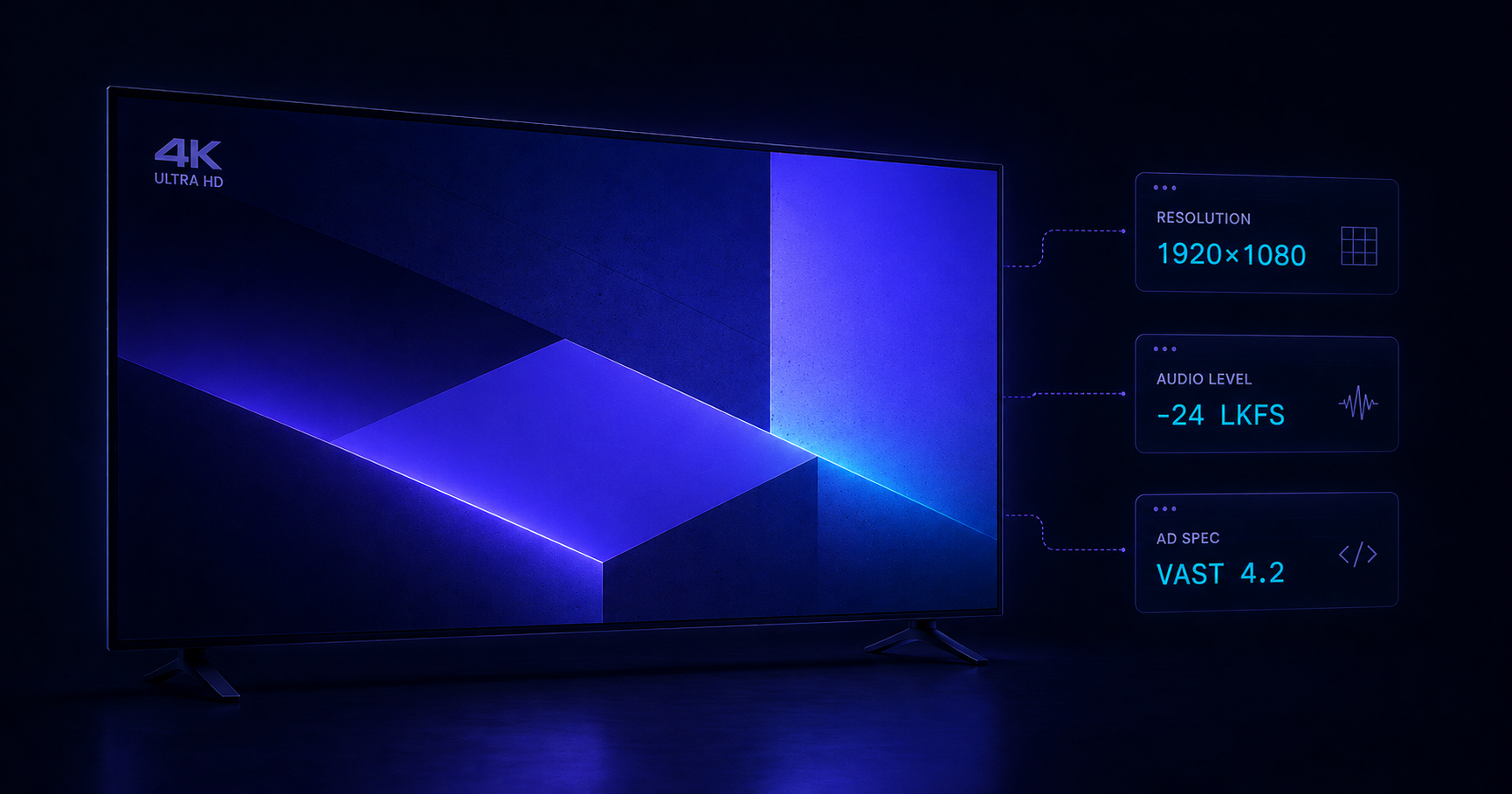
CTV creative must be video files served through VAST, typically 15 or 30 seconds in duration. The resolution requirement is 1920x1080 (full HD) at minimum; 4K delivery (3840x2160) is increasingly expected on premium inventory and will be flagged as quality deficient if missing from the creative package. Bitrate should be 15–25 Mbps for 1080p and 25–40 Mbps for 4K. Lower bitrates produce visible compression artifacts at television scale that damage brand perception in ways that are invisible at mobile screen sizes.
Codec support varies by device but H.264 (AVC) in an MP4 container is universally supported across Roku, Fire TV, Apple TV, and smart TV platforms. H.265 (HEVC) delivers superior quality at lower bitrate but requires device-level codec support confirmation before using as your primary delivery file. Deliver both when running on premium inventory to let the LtvAdx ad server select the correct variant per device capability.
Audio must be stereo or 5.1 surround at broadcast-standard loudness levels: -24 LKFS integrated loudness, -2 dBTP true peak maximum, following ATSC A/85 standards. Audio that is significantly louder or quieter than the programming content it interrupts produces an immediately negative viewer reaction and is a quality violation in most publisher acceptance policies.
VAST wrapper and tracking requirements
CTV creative is delivered via VAST XML, which wraps the media file with tracking event URLs, click-through destinations (where applicable), and verification node declarations for third-party brand safety vendors. VAST 4.2 is the current standard and the version required for proper verification and measurement on LtvAdx inventory.
VAST wrapper depth — the number of nested VAST redirect URLs before reaching the inline media file — must be controlled carefully. Each wrapper layer adds a network request and potential failure point. Publishers typically accept a maximum of three wrapper levels; the LtvAdx platform enforces a configurable maximum wrapper depth per publisher to prevent timeouts that result in unfilled slots. If your creative is served via a third-party ad server with VAST wrapping, confirm the total wrapper depth before submitting for publisher approval.
All tracking pixels included in the VAST must be HTTPS and reachable from the SSAI stitcher environment, not just browser environments. Pixels that require JavaScript execution or browser-specific headers will silently fail in SSAI delivery paths. Test creative tracking in a headless environment before campaign launch using the LtvAdx VAST validation tool or the developer API.
Creative strategy: the living room context
Television is a lean-back medium. Viewers watching FAST channels and streaming apps are typically seated at a distance of 8–12 feet from the screen, often in a social environment with other household members. The interaction model is passive: there is no mouse, no touch, and no habitual skip reflex trained by years of YouTube pre-roll. These contextual differences have direct implications for creative strategy.
Text on screen must be legible at viewing distance. This means minimum 36pt equivalent at 1080p for any body copy and 60pt+ for headlines. Creative designed for mobile that uses dense on-screen text at small sizes fails on television even when technically rendered at full resolution. Design for the distance, not the resolution.
Brand presence should be established early. CTV viewers cannot skip, but they can look away, leave the room, or talk over the ad. Branding in the first three seconds — through visual identity, voiceover, or audio logo — anchors recall even if the viewer returns partway through. A brand reveal at the 25-second mark of a 30-second ad is a digital creative pattern that produces poor CTV recall metrics.
Audio-led versus visual-led creative
CTV creative should be audio-sufficient: a viewer who looks away from the screen during an ad should be able to understand the brand message from audio alone. This is the opposite of the mobile video best practice (design for sound-off), and it is one of the most common errors that brands make when repurposing digital creative for CTV. A visually driven ad that shows phone UI screenshots while text overlays explain the product delivers nothing to a viewer who is momentarily looking elsewhere.
For campaigns targeting households across CTV and linear addressable (see the addressable linear guide), audio consistency is particularly important: the same creative running on a FAST channel and on an addressable linear feed must work in the television audio environment. Mix and master specifically for television, not for mobile compression.
Duration strategy: 15s vs 30s vs 60s
Thirty seconds is the standard CTV duration because it mirrors the linear television creative ecosystem — most brands have 30-second broadcast assets. But the right duration depends on the objective. Fifteen-second creatives are effective for brand awareness reminders to audiences who have already seen the full message — they work well as frequency-efficient companion executions in a creative sequencing strategy. Sixty-second creatives are appropriate for launch campaigns where the product requires explanation, but only when the creative genuinely justifies the length; a padded 60-second ad with 30 seconds of meaningful content trains viewers to tune out.
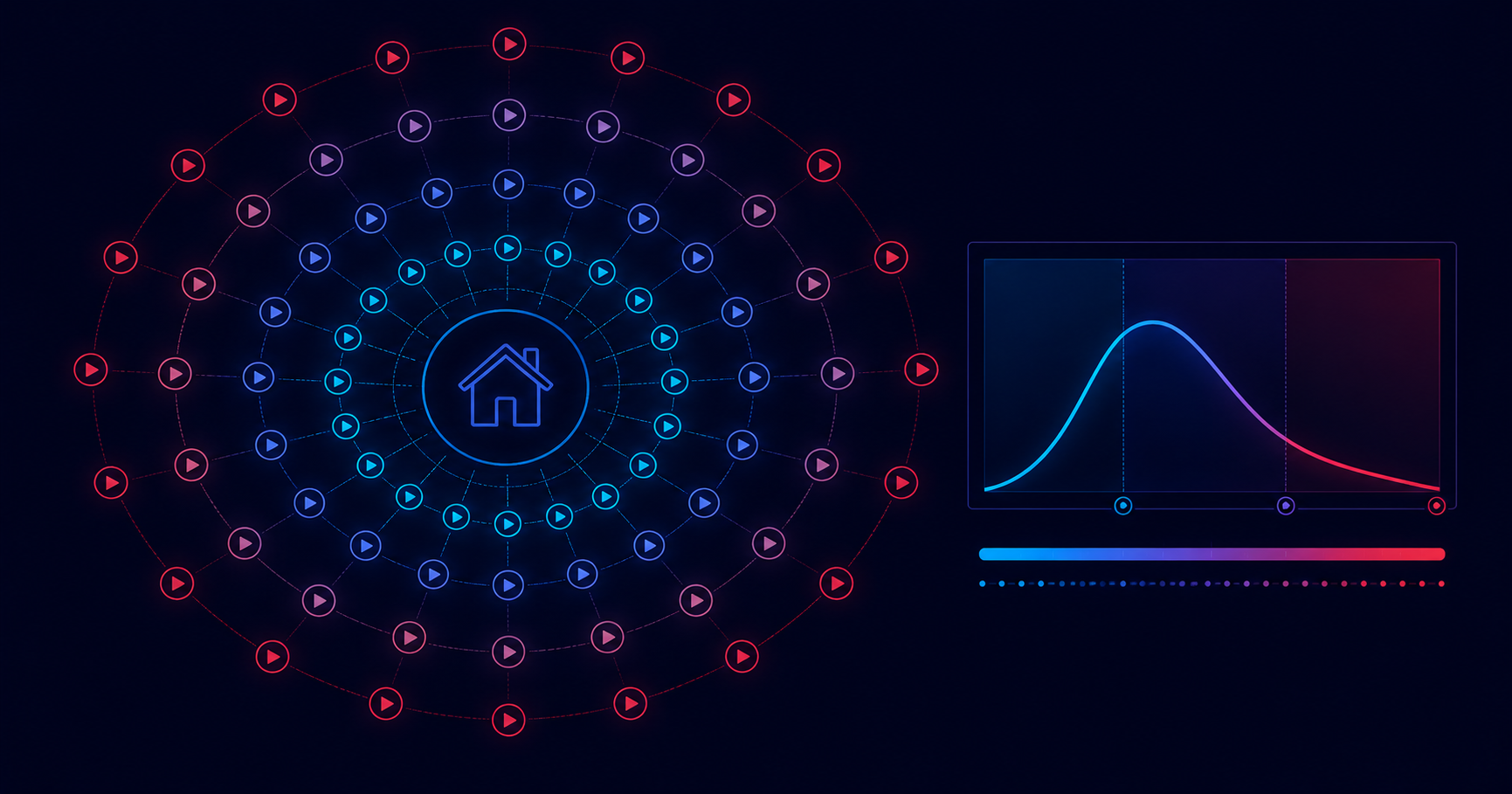
Creative sequencing — serving different creative versions to the same household at different frequency points — is increasingly supported in CTV through household-level frequency targeting. A sequenced strategy might serve a 30-second brand introduction on the first household exposure, a 15-second product benefit on the second, and a 15-second call-to-action on the third. This requires household identity resolution at the ad server level, which LtvAdx provides through HouseholdID.
Creative QA checklist before submission
Before submitting creative to a publisher or trafficking a CTV campaign, review each creative asset against this checklist. Resolution: 1920x1080 minimum with 4K variant where required. Bitrate: 15+ Mbps for HD. Codec: H.264 primary with H.265 variant if available. Audio: -24 LKFS integrated loudness, stereo or 5.1. Duration: matches declared VAST duration exactly. HTTPS tracking: all pixels reachable from server environment. VAST depth: three wrappers or fewer. Legibility: text readable at viewing distance. Branding: brand presence in first three seconds. The programmatic TV buying checklist includes a pre-flight creative review section that extends this list with trafficking-specific steps.
For creative format questions specific to LtvAdx publisher inventory, publisher creative acceptance policies are documented in the publisher portal. Advertisers with non-standard creative requirements should contact the campaign team before launch to avoid approval delays. For a complete walkthrough of CTV campaign setup including creative trafficking, request a demo.