Programmatic TV buying has enough moving parts — deal types, creative specs, identity, supply chain verification — that campaigns fail from missed setup steps far more often than from bad targeting strategy. This is a working checklist for the three phases that matter: what to confirm before launch, what to verify during trafficking and QA, and what to actually watch once the campaign is live. It assumes familiarity with the mechanics covered in the CTV DSP buying guide; this piece is the operational punch list that guide leads into.
Pre-campaign checklist
- Confirm target households or audience segments and how they'll be resolved — first-party CRM match, ACR-based viewing segments, or demographic overlays — before the media plan locks, not after.
- Brand safety and content category exclusions, set explicitly rather than assumed as platform defaults. See the brand safety guide for the full control set.
- Creative lengths confirmed against what the inventory actually accepts — 15s, 30s, and 60s cuts are not universally interchangeable across every publisher and pod configuration.
- Inventory type confirmed: live linear via addressable substitution, VOD, or FAST — each has different pacing, pod structure, and measurement implications.
- Deal IDs secured for any PMP or programmatic guaranteed commitments before launch, not requested after the campaign is already live and underdelivering.
- Frequency caps set at the household level, not per-device — a device-level cap alone will let real household frequency run well past the intended limit.
- Measurement vendor and attribution window agreed with the buyer before launch, including whether brand lift, incrementality, or last-touch attribution governs how success is reported.
Trafficking and QA
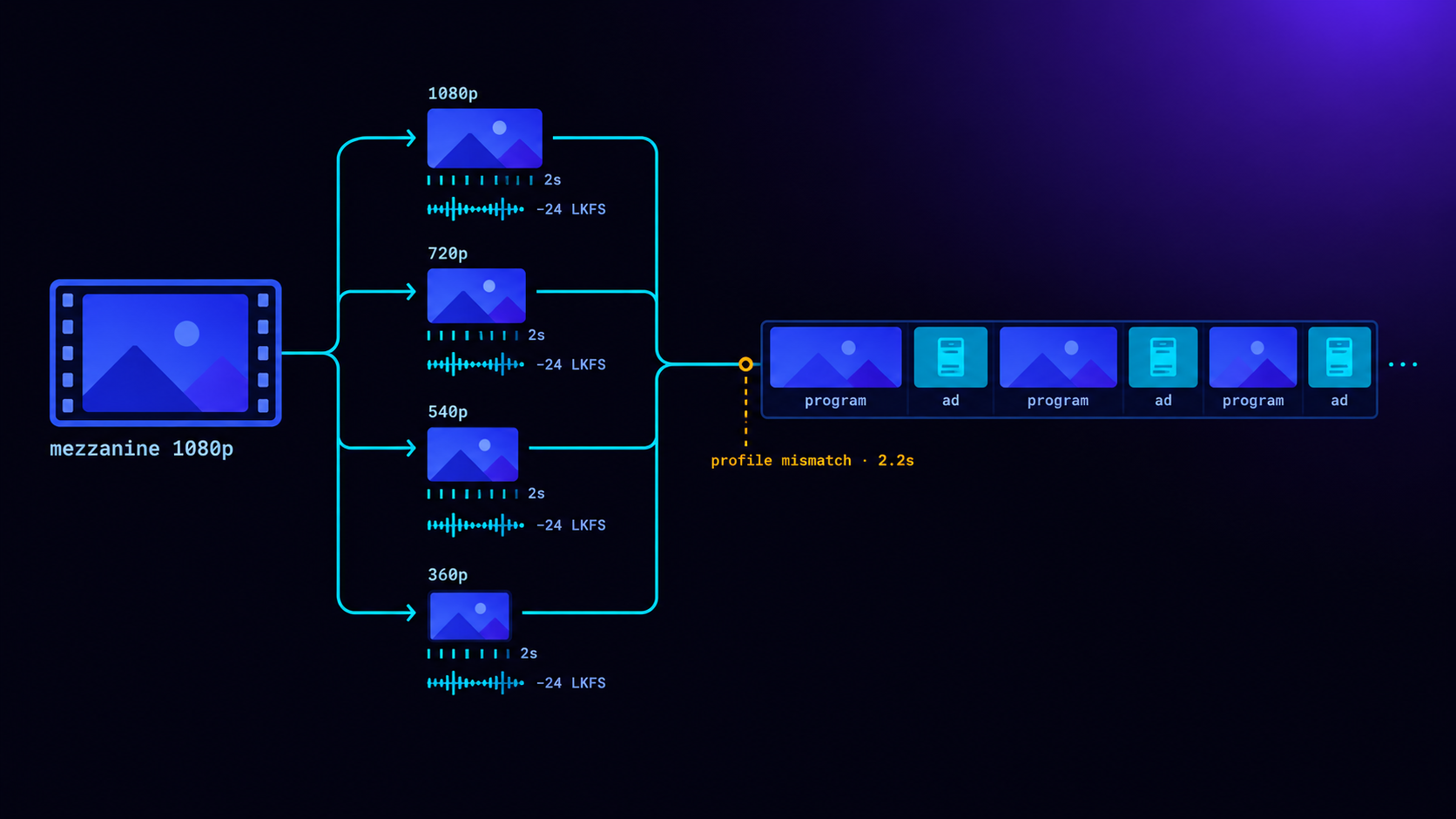
Upload VAST tags or hosted creatives with bitrate ladders appropriate to CTV — H.264 at 1080p as the floor, H.265/HEVC where the inventory supports it — and validate the tag structurally with a real parser before it goes live; the free VAST Tag Validator catches the structural issues that cause silent rejections on strict CTV players. Test on actual devices, not just a desktop test harness: Roku, Fire TV, and at least one smart TV operating system (Samsung Tizen or LG webOS), since CTV players enforce spec compliance more strictly than web-based test tools and device-specific quirks are common.
Verify click-through URLs and companion banners are disabled wherever the placement doesn't support them — a large share of CTV inventory is video-only with no interactive layer, and a tag that assumes click-through will exist can produce a confusing (or broken) experience on players that simply ignore the unsupported element rather than erroring cleanly. Confirm tracking pixels are HTTPS and reachable both from client players and, for any SSAI-delivered impressions, from the stitcher itself — an endpoint that only resolves from a browser context silently drops every SSAI-side beacon.
In-flight optimization
Once live, monitor VCR against the expected 85–95% non-skippable range as a delivery-health check, and investigate any inventory running meaningfully below it — that's more often a sign of a technical delivery problem than an audience-fit issue. Track win rate by supply source to identify where the campaign is actually clearing versus where it's bidding but losing, and review supply path transparency — schain and app-ads.txt data — to confirm demand is flowing through authorized, direct paths rather than unnecessary reseller hops that add latency and reduce margin without adding value.
Shift budget toward the apps, dayparts, and content categories delivering the most efficient reach against the campaign's actual objective — not just the lowest CPM, which frequently correlates with lower-quality or less-relevant inventory. Pause underperforming domains and apps deliberately rather than letting a broad buy quietly underdeliver in pockets nobody is watching, and reconcile billing weekly against the reporting dashboard rather than waiting until the end of the flight to catch a discrepancy. Programmatic TV rewards disciplined, weekly-cadence operations far more than the set-it-and-forget-it approach that works for some display campaigns — the inventory quality and pricing dynamics move fast enough that a campaign checked once at launch and once at wrap-up will consistently leave performance on the table.