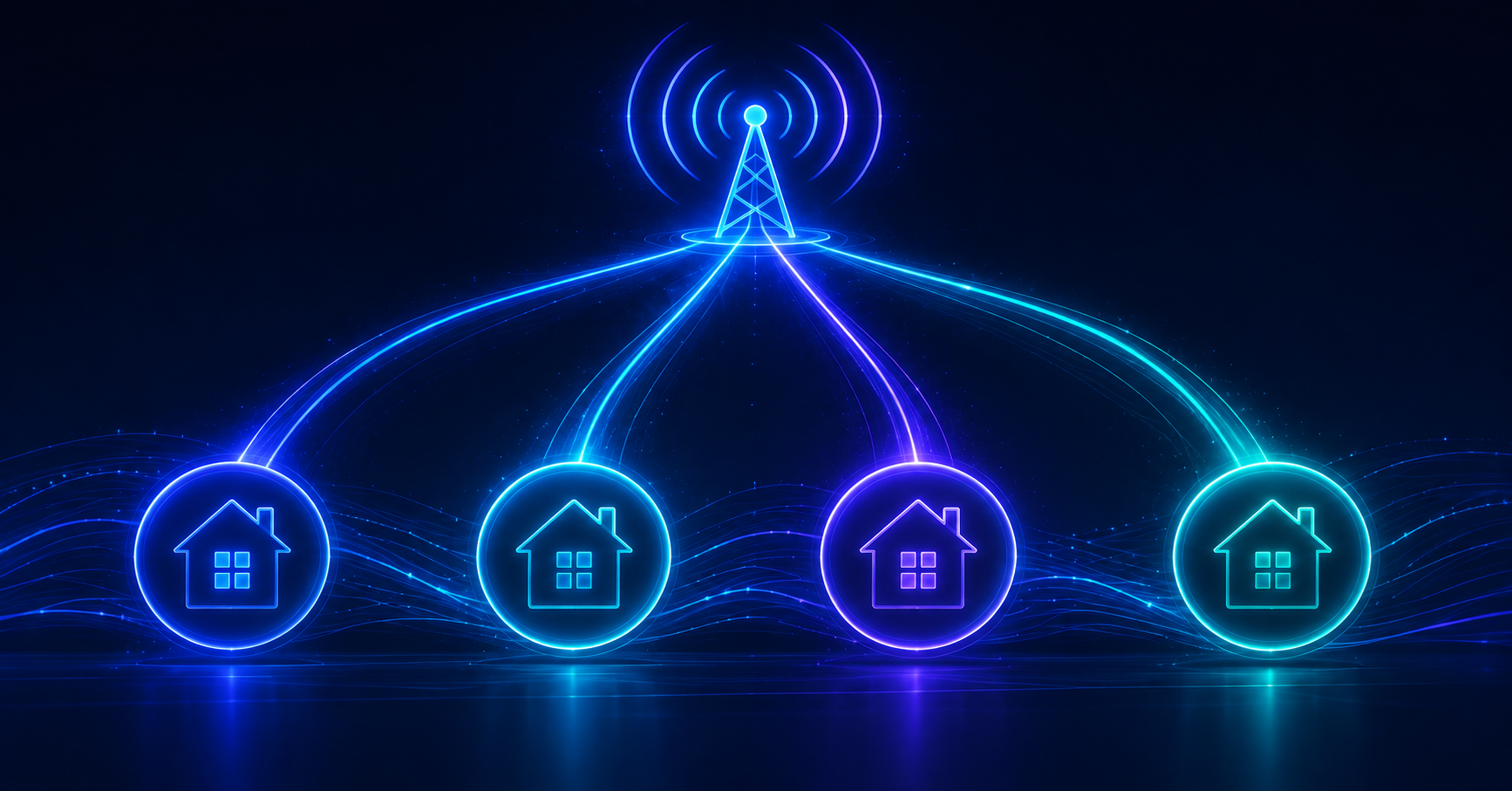
Linear television advertising has been sold the same way for sixty years: networks sell daypart rotations against demographic ratings, agencies buy gross rating points, and every household watching the same channel at the same time sees the same commercial. Addressable TV broke that model. Today, two households watching the same linear channel at the same moment can see entirely different advertisements, each selected by an algorithm that knows which household is more likely to respond to which message. The shift from broadcast-uniform advertising to household-targeted linear advertising is the most structurally significant change in television monetization since the introduction of the remote control. This guide explains how linear TV programmatic advertising actually works — the technology, the data, the buying mechanics, and the measurement infrastructure — with the LtvAdx linear TV programmatic platform as the operational reference.
The physical mechanics of addressable ad insertion
Traditional linear television delivers a single content stream to every household connected to the distribution system. The network sends one signal; every cable headend and satellite transponder retransmits it; every set-top box in the country displays the same frame at the same moment. Addressable advertising requires interrupting this uniform delivery and substituting a household-specific ad for the network's default national advertisement — without the household noticing the substitution.
In cable MVPD systems, addressable substitution happens at the cable headend or, in more advanced deployments, at the individual set-top box. The operator's system receives a signal from the national network that a commercial break is beginning (typically through a SCTE-35 cue tone embedded in the video stream). This cue tone triggers the local ad insertion system, which overrides the national spot with a locally-served ad for the specific household or zone. The household sees the substituted ad; neighbors in the same zip code watching the same channel may see a completely different ad.
Satellite systems operate differently: the addressable substitution happens earlier in the signal path, before delivery to the dish, using bandwidth reservation techniques that carve out ad slots in the satellite signal for local or addressable fill. Internet-delivered linear (vMVPD) systems like YouTube TV and Hulu Live have the most technically flexible implementation: because delivery is through the internet to an app, the addressable substitution is handled by the app's ad serving layer exactly as OTT ad serving works — through SSAI manifest stitching that inserts the household-specific ad before the stream reaches the player.
The data layer: how operators know which household to target
Addressable television targeting depends on the operator's subscriber data. Cable and satellite MVPDs have subscriber records for every household in their service area: service address, subscription tier, set-top box device identifier, and in some cases billing information that proxies for income tier. This subscriber data is the foundation of addressable targeting — it is the operator's owned, first-party audience asset, and it cannot be accessed by DSPs or advertisers directly. Instead, advertisers submit audience segment specifications (targeting criteria) or hashed first-party data (CRM match files), and the operator's system matches those criteria against its subscriber database to produce a household match list.
The match process is a privacy-safe intersection: the advertiser's criteria or hashed data is evaluated against the operator's subscriber records without either party exchanging raw personal information. The operator returns a count of matched households and activates targeting for those households without disclosing which specific subscribers match. This is fundamentally different from digital programmatic, where audience segment data flows through the supply chain in bid requests — in addressable linear, the targeting decision is made at the operator level and never leaves the operator's infrastructure.
The LtvAdx operator platform connects MVPD and vMVPD subscriber data to the LtvAdx demand ecosystem through a privacy-safe audience activation layer. Advertisers working with agencies can submit audience specifications through the LtvAdx deal infrastructure, which translates them into operator-level targeting requests and returns household match counts and delivery commitments before campaign launch.
Zones vs household-level addressability
The most precise form of addressable television targets individual households. But not all operators have deployed set-top box infrastructure capable of true household-level substitution. Zone-based addressability — targeting geographic zones of 10,000 to 100,000 households — is more widely available and requires less sophisticated insertion infrastructure. Zone-based targeting approximates household targeting for broad demographic criteria (a zone in an affluent suburb is a reasonable proxy for an income-targeted buy) but is insufficient for CRM matching or narrow behavioral targeting.
The industry is moving toward household-level addressability as set-top box hardware refreshes and IP-delivered linear (vMVPD) grows its share of linear viewing. vMVPD platforms like YouTube TV and Hulu Live are architecturally capable of per-household targeting because they deliver over the internet through household-authenticated accounts. The growth of vMVPD share — particularly among younger, more mobile audiences — is accelerating the availability of true household-level linear addressability.
Buying mechanics: programmatic guaranteed vs upfront
Linear addressable inventory has historically sold through annual upfront commitments — a volume and rate agreement signed months before delivery. The programmatic version replaces the manual insertion order with an automated deal: the advertiser's DSP or trading desk activates a deal ID, the operator's system recognizes the deal and delivers against the agreed parameters, and reporting flows back to the buyer automatically without manual discrepancy reconciliation.
The programmatic guaranteed deal structure that works in CTV is directly applicable to addressable linear. The buyer specifies: target audience (described as segment criteria or passed as a hashed CRM match list), geographic market, daypart preferences, content genre restrictions, minimum impression volume, flight dates, and CPM. The operator confirms available inventory against those parameters, returns a deal ID, and the automated delivery system executes against the confirmed commitment. The key operational difference from CTV programmatic guaranteed is that linear delivery counts are measured by the operator's insertion system rather than by VAST beacon — discrepancy reconciliation requires alignment on counting methodology before deal execution.
Measurement: the long-standing challenge and current solutions
Addressable linear TV measurement has historically been the weakest link in the buy: operators count their own insertions, advertisers have no independent verification, and the outcome attribution path from a linear TV ad to a downstream consumer behavior requires data collaborations that have been commercially impractical at scale. This has improved substantially. Three approaches now provide meaningful measurement for addressable linear campaigns.
Operator-provided household delivery logs — a record of which set-top boxes received which insertions — are the foundation of linear addressable measurement. These logs can be matched against advertiser CRM data in a data clean room to produce attribution rates: what percentage of households that received the ad subsequently made a purchase, visited a store, or took another measurable action. The clean room match preserves privacy by preventing raw subscriber data from leaving the operator's environment while enabling the attribution calculation.
IP-based cross-screen attribution bridges addressable linear exposure to digital behavior. When the same household IP that received a linear addressable insertion subsequently visits the advertiser's website, the connection is attributable. This is the same methodology used for CTV site lift attribution, extended to linear TV. The accuracy is the same as for CTV IP matching — strong for residential broadband, weaker for mobile and shared network environments.
ACR-based measurement extends attribution to households where the IP match is unavailable. If the household's smart TV registers the linear commercial via ACR and the HouseholdID graph links that smart TV to other connected devices in the household, the linear ad exposure can be attributed to the household even without an operator delivery log. This is the cross-screen measurement capability that makes addressable linear a measurable channel rather than a black box.
Linear vs CTV: integration and incremental reach
The strategic question for most advertisers is not whether to use linear addressable or CTV but how to use both together to maximize household reach without over-exposing the same households across both channels. A household that watches linear cable and also uses streaming apps is reachable through both paths — but paying for them independently without de-duplication wastes budget on duplicate impressions.
The household reach overlap between linear addressable and CTV varies by market and audience segment. Older demographics (55+) tend to skew toward linear cable viewership; younger demographics and cord-cutters are exclusively reachable through CTV. The linear TV vs CTV comparison covers the audience composition differences in detail. For campaign planning, the practical approach is to model the linear-CTV overlap for your target audience in your target markets using the HouseholdID reach analysis available through operator partnerships, then allocate budget to minimize overlap while maximizing total household reach across both channels.
The operator as the central infrastructure node
Linear TV programmatic works through the operator — the cable company, satellite provider, or vMVPD — because the operator controls the last-mile delivery infrastructure. Without operator participation, there is no addressable substitution. This structural reality means that programmatic access to linear TV inventory is gated by operator technology readiness, operator commercial willingness to enable programmatic buying, and the contractual framework between networks and operators that governs what proportion of network ad time can be substituted by local addressable inventory.
LtvAdx builds its linear addressable capabilities through operator partnerships that integrate the operator's insertion infrastructure with the LtvAdx demand ecosystem. Operators that complete the integration gain access to programmatic demand from the LtvAdx advertiser base for their addressable inventory. Advertisers gain access to household-targeted linear TV inventory they cannot otherwise reach programmatically. The linear TV programmatic overview explains the commercial terms and technical requirements for operator integration. Operators ready to begin the integration process should contact the operator partnerships team or request a technical demonstration.