Connected TV (CTV) advertising delivers video ads on internet-connected television screens — smart TVs running Roku OS, Samsung Tizen, or LG webOS; streaming sticks like Amazon Fire TV and Roku Express; gaming consoles; and Apple TV boxes. It combines the creative impact of television — full-screen video, household co-viewing, lean-back attention — with the targeting precision, measurement accountability, and programmatic buying infrastructure of digital advertising. For publishers, it is the highest-CPM streaming inventory category. For advertisers, it is the channel that reaches the 40%+ of US households who have cut or never subscribed to traditional cable TV.
What counts as CTV inventory?
CTV inventory is any ad impression served to a television-connected device running a streaming app. This includes ad-supported video on demand (AVOD) apps like Tubi and Peacock, free ad-supported streaming TV (FAST) linear channels on Pluto TV and Samsung TV Plus, ad-supported tiers of subscription platforms like Netflix and Disney+, and live sports and news streams delivered through OTT apps. The defining characteristic is the television screen — not the content type or the business model. A mobile phone running the same Peacock app serves OTT advertising, not CTV, because the screen is not a television.
The complete OTT, CTV, AVOD, and FAST terminology guide covers all the distinctions in depth. For the purposes of advertising planning, CTV is the segment that commands premium CPMs, delivers the highest completion rates, and requires broadcast-grade creative specifications.
How CTV advertising fits the programmatic stack
CTV advertising operates through the same OpenRTB programmatic infrastructure as digital display and video, with television-specific extensions for pod structure, household identity, and SSAI delivery. Publishers monetize CTV through server-side ad insertion (SSAI) or client-side VAST, selling inventory via direct IO, programmatic guaranteed deals, private marketplace deals, and open auction. Supply-side platforms like LtvAdx package publisher inventory and run auctions; demand-side platforms bid on behalf of advertisers using audience segments, deal IDs, and content metadata.
The LtvAdx ad server handles the decision layer — resolving which campaign wins each ad slot in under 10ms — and the SSAI engine stitches the winning creative into the HLS or DASH manifest before it reaches the player. This server-side path is why CTV ads cannot be blocked by consumer ad blockers: the ad is part of the video stream, not a separate asset loaded by the browser.
How CTV advertising is bought
CTV inventory is transacted through four primary deal structures. Open auction programmatic is the most accessible entry point — buyers configure targeting in their DSP and bid in real-time against available inventory. Private marketplace (PMP) deals give preferred buyers first-look at specific publisher inventory at negotiated floor CPMs. Programmatic guaranteed (PG) deals commit to fixed volume and CPM in advance, executing through automated delivery rather than manual insertion order. Programmatic guaranteed is the fastest-growing CTV transaction model because it delivers upfront-style inventory certainty with programmatic reporting depth.
Direct IO deals — negotiated between publisher sales teams and agency buyers — remain significant for premium live sports, tentpole programming, and sponsorship packages. The upfront vs programmatic strategy guide explains how to allocate budget across these deal types for different campaign objectives.
Targeting capabilities in CTV
CTV targeting has matured beyond the simple genre and daypart signals of early streaming advertising. Modern CTV campaigns can target by household demographics (income, family composition, home ownership), geographic precision (DMA, zip code, congressional district), content genre and network affiliation, device type and platform, and first-party audience segments from CRM matching. The LtvAdx HouseholdID graph resolves multiple device identifiers — Roku RIDA, Amazon AFAI, Samsung TIFA — to a persistent household key that enables frequency capping across all devices in the home and deterministic audience targeting without browser cookies.
ACR (automatic content recognition) data from smart TV operating systems adds a viewing history layer: advertisers can target households that have watched competitor advertising on linear TV, or reach sports fans identified by their live sports viewership patterns. The HouseholdID and identity guide covers the technical architecture and match rate expectations for each targeting approach.
Measurement and attribution
CTV measurement operates through four layers. VAST beacon events — impression, quartile, complete — record delivery progress. Household reach and frequency reports, built from the identity graph, show unique households reached and exposure distribution. Brand lift studies compare exposed and unexposed household survey responses. Outcome attribution connects CTV ad exposure to downstream web visits, searches, and purchases through household IP matching and CRM identity bridges.
The CTV attribution and measurement guide covers all four layers in detail, including incrementality testing methodology for campaigns that require the highest confidence in attribution. The VCR vs completion rate analysis explains what video completion rate actually measures in SSAI environments — a critical distinction for setting benchmarks correctly.
Why advertisers are shifting budget to CTV
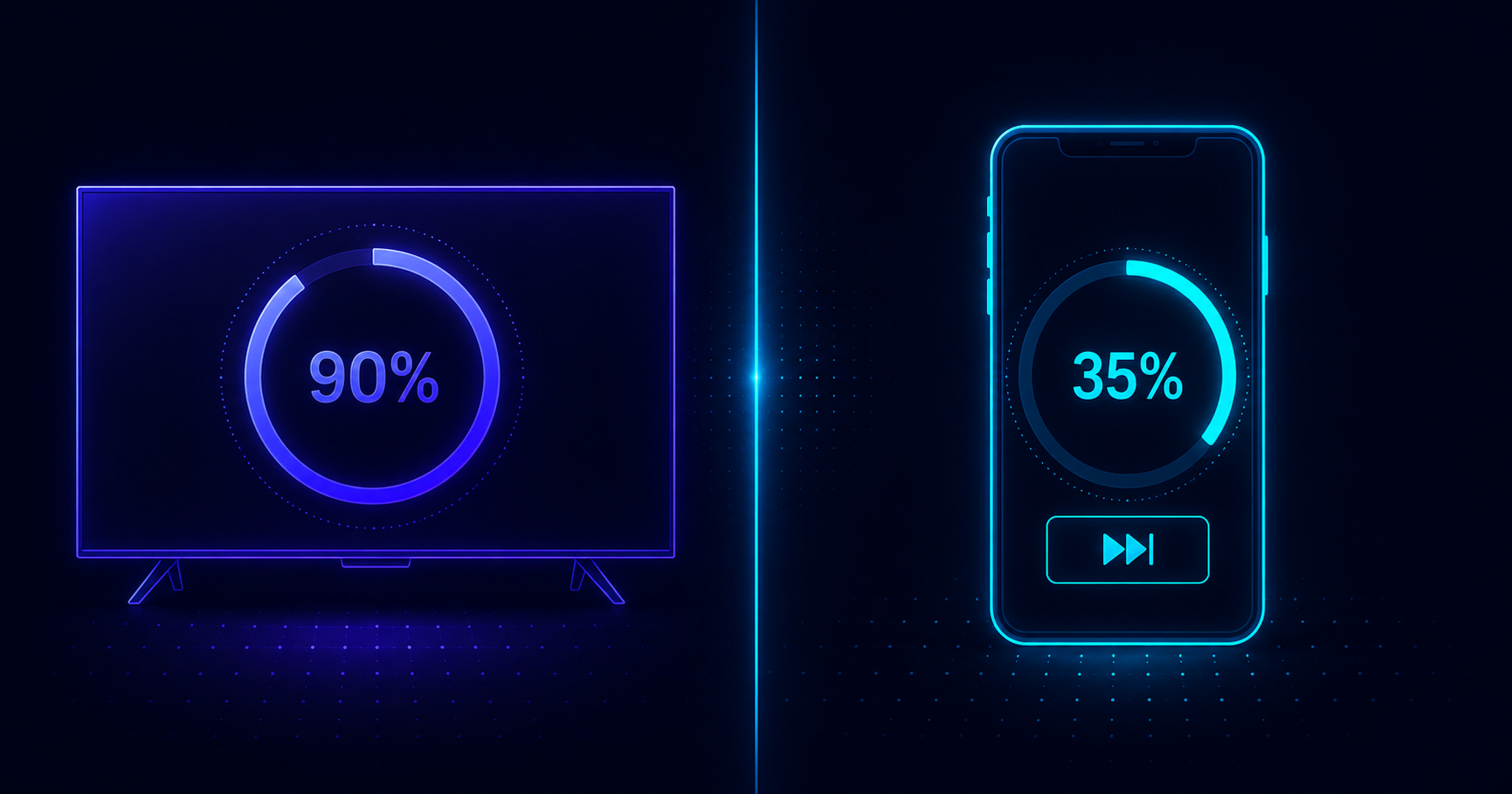
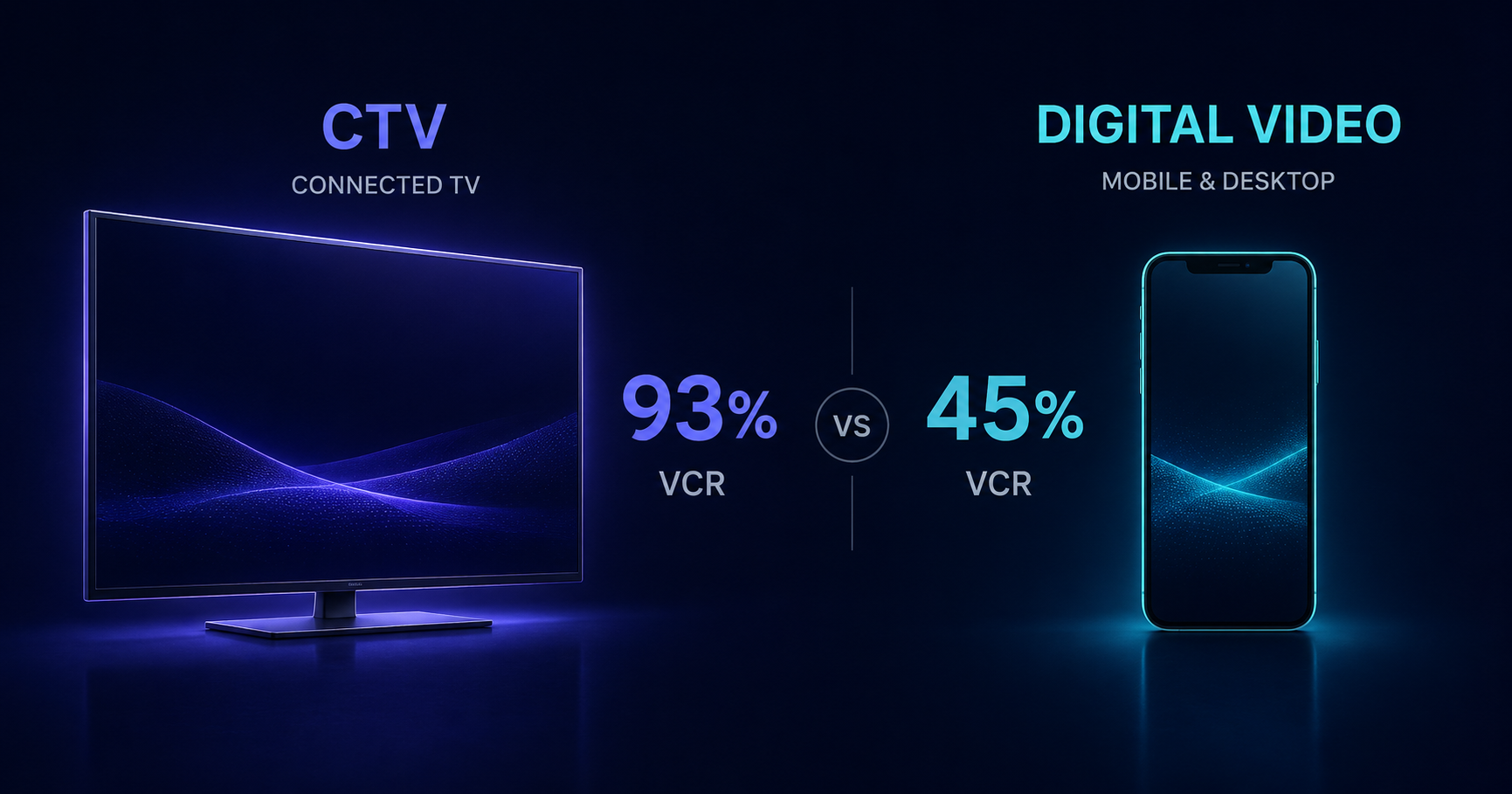
CTV completion rates consistently exceed 90% because ads are non-skippable and full-screen. The audience is engaged and co-viewing — household members watching together amplify the brand exposure per impression served. Cord-cutters and cord-nevers — a growing share of the adult population — are exclusively reachable through CTV and not in traditional linear TV ratings. And unlike linear TV, every CTV impression is measurable: publishers deliver VAST event logs, household identity data, and outcome attribution that GRP-based linear buying cannot match.
For publishers launching CTV monetization, start with the FAST channel monetization playbook or the LtvAdx getting started guide. For advertisers evaluating CTV as an addition to their media mix, the CTV vs digital video comparison and the programmatic TV buying checklist are the right starting points. To see the platform, request a demonstration.
Frequently asked questions about CTV advertising
What is CTV advertising?
CTV advertising is video advertising delivered on internet-connected television screens — including smart TVs, Roku, Amazon Fire TV, Apple TV, and gaming consoles. Ads are served through streaming apps and FAST channels using VAST and SSAI technology, with household-level targeting and digital-grade measurement.
What is the difference between CTV and OTT advertising?
OTT (over-the-top) refers to all internet-delivered video regardless of device — including mobile, tablet, desktop, and TV screens. CTV is the subset of OTT that specifically reaches a television screen. CTV ads command higher CPMs and completion rates because they are full-screen, non-skippable, and viewed in a lean-back living room environment.
How is CTV advertising bought and sold?
CTV inventory is bought and sold through direct IO deals, programmatic guaranteed (PG) deals, private marketplace (PMP) deals, and open auction programmatic. Publishers connect their SSAI endpoints to an SSP or exchange like LtvAdx; buyers access inventory through DSPs via OpenRTB bid requests.
What targeting is available in CTV advertising?
CTV targeting options include household demographics, geographic targeting by DMA or zip code, content genre and daypart, device type, first-party CRM audience matching, and behavioral segments derived from ACR viewing data. Household-level frequency capping is available through identity graphs like HouseholdID.
How is CTV advertising measured?
CTV measurement includes video completion rate (VCR) via VAST beacons, household reach and frequency via identity graphs, brand lift studies comparing exposed and unexposed households, and outcome attribution connecting TV exposure to web visits, searches, or purchases through household IP matching.
What CPMs does CTV advertising command?
CTV programmatic CPMs typically range from $15 to $45 depending on audience targeting, content genre, deal type, and inventory tier. Premium live sports and primetime FAST inventory commands the highest CPMs; open auction remnant inventory is at the lower end of the range.