"Linear TV" and "CTV" get used as if they're opposite ends of a single spectrum, but they actually describe two different things: how content is distributed, and how ads get bought and targeted within that distribution. Understanding the difference — not just as trivia but as it affects buying, targeting, and measurement — matters because most real media plans in 2026 use both, and conflating them leads to campaigns planned around the wrong assumptions.
Linear TV: broadcast scale, panel-based measurement
Linear TV is the traditional model: content broadcast on a fixed schedule over cable, satellite, or over-the-air, and viewers watch it live (or shortly after, via DVR) rather than selecting from an on-demand catalog. Ads run in scheduled pods at fixed points in the broadcast. Measurement has historically relied on panels — Nielsen and Comscore sample a representative slice of households and extrapolate — reported as GRPs (gross rating points), a reach-times-frequency metric with decades of media-planning convention behind it but comparatively coarse granularity.
Ad buying on linear is done by daypart and program, not by individual household or viewer segment — you buy against "primetime drama audience 25-54," not against a specific first-party CRM segment. Addressable linear extends targeting into this same distribution infrastructure by substituting different creatives for different households within the same broadcast, but the underlying content delivery — one broadcast feed, viewed live — stays the same.
Connected TV: streaming distribution, impression-level data
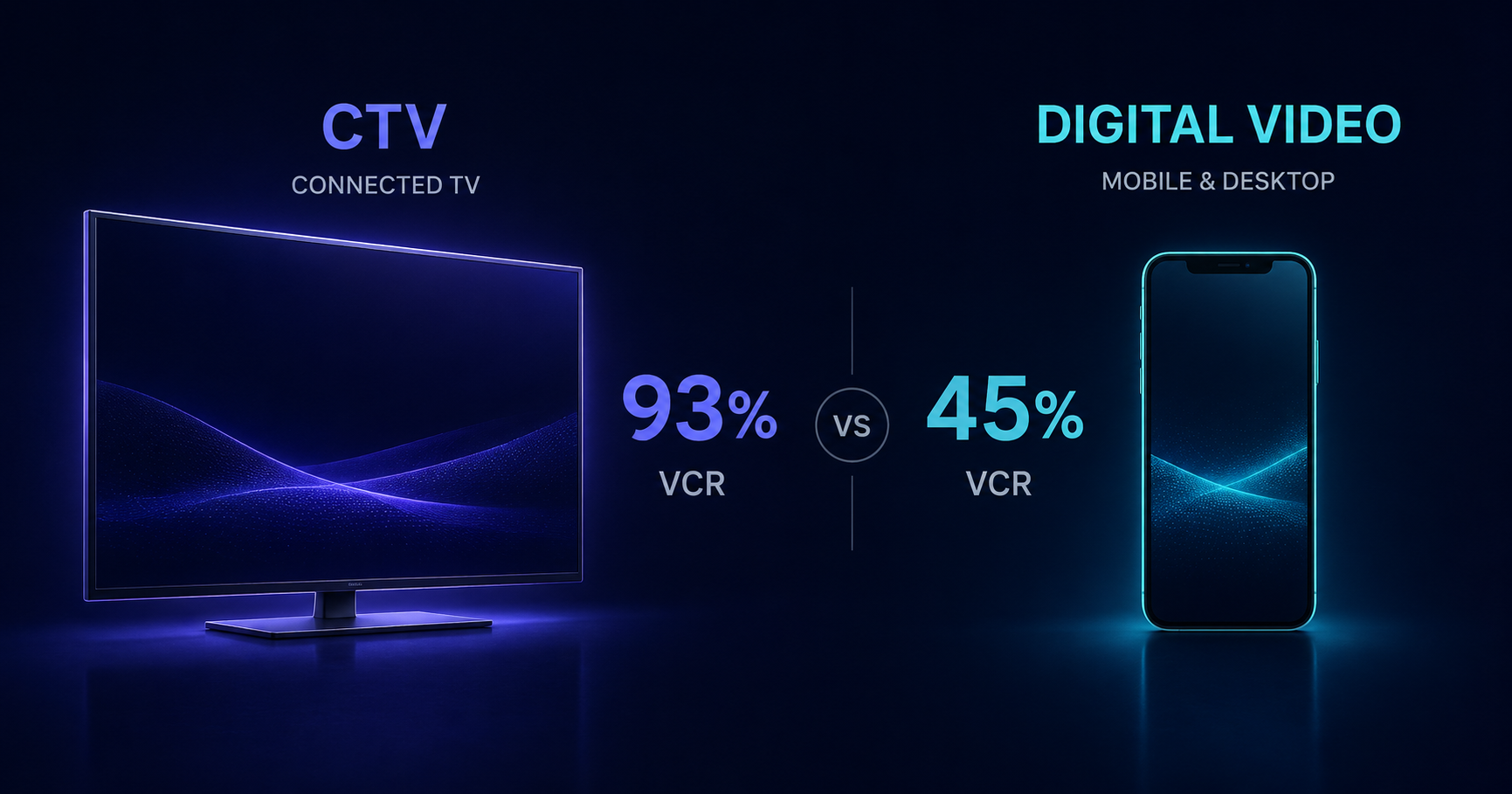
CTV describes any television that streams internet video — a smart TV with a built-in operating system, or a traditional TV connected via Roku, Fire TV, Apple TV, or a similar device. Content is delivered over IP through an app, not a broadcast feed, and ads are served per impression rather than trafficked into a fixed schedule slot. Because delivery is IP-based, CTV inventory carries device identifiers, IP-derived household signals, and VAST completion events that simply don't exist in broadcast distribution — which is what makes CTV optimizable and attributable in ways closer to digital video than to classic TV buying, as covered in the CTV vs digital video comparison.
Most CTV inventory is transacted programmatically — via OpenRTB auction, private marketplace deals, or programmatic guaranteed — through the mechanics covered in the end-to-end ad serving guide. That programmatic-first buying model is itself a structural difference from linear, where direct insertion orders and upfront commitments still dominate, even as addressable and programmatic linear grow.
Where the two genuinely converge — and where they don't
The line blurs in one specific place: FAST channels. A FAST channel simulates linear's scheduled, tune-in experience but delivers it over IP through a CTV app — Pluto TV and Samsung TV Plus behave like linear from the viewer's side while carrying CTV's impression-level ad infrastructure underneath. It's a genuine hybrid, not a marketing label.
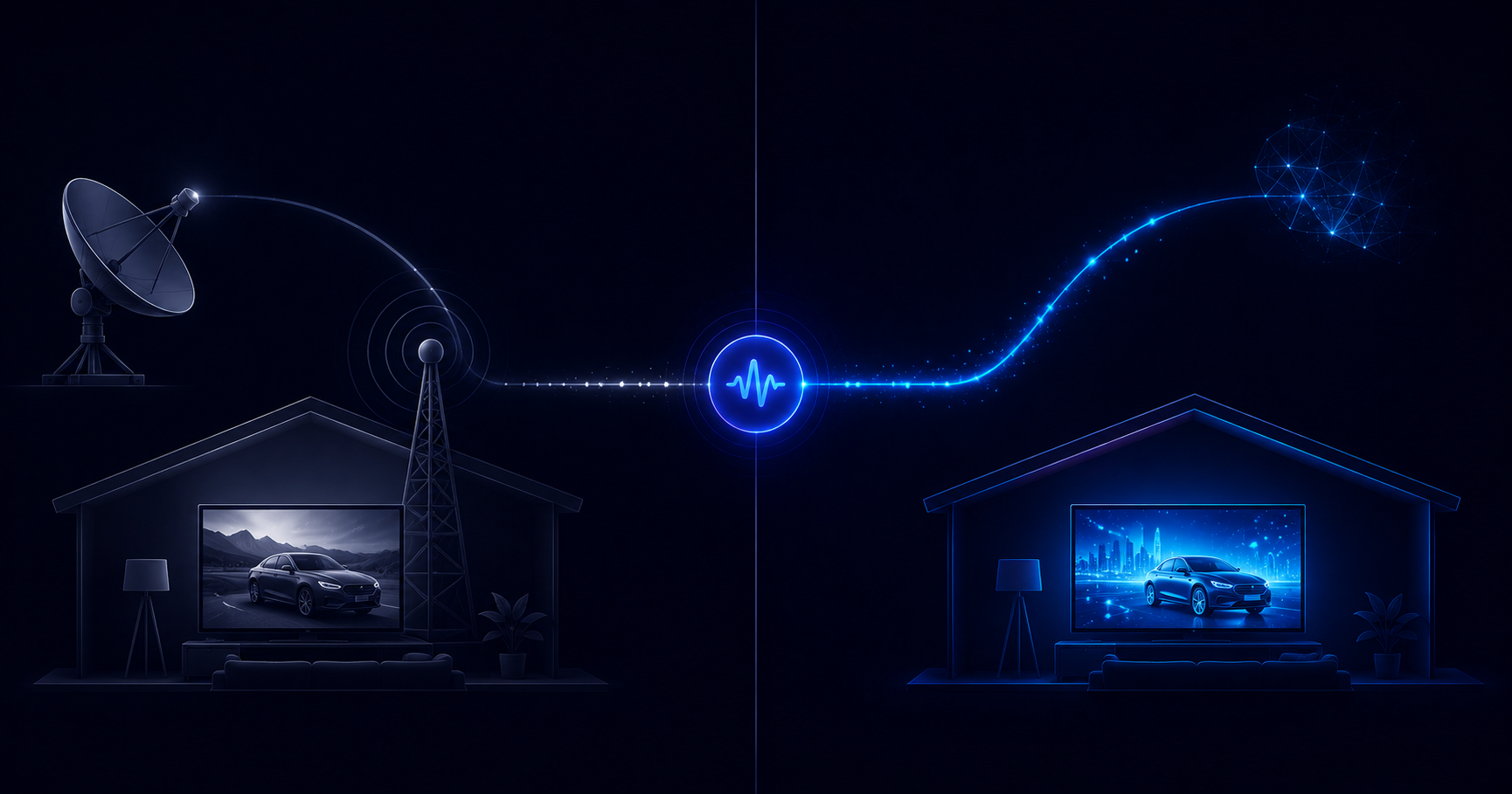
Outside of FAST, though, the distinction holds up: linear is broadcast distribution with panel-based measurement and daypart buying; CTV is IP distribution with impression-level data and programmatic-first buying. A live NFL broadcast watched on a cable box is linear. The same broadcast watched through a streaming app on a smart TV is CTV, even though the content and the moment are identical — which is exactly the case addressable linear and CTV increasingly need to be planned and measured together to cover properly.
Why most 2026 media plans use both
Linear still delivers reach CTV structurally can't match for specific audiences and content categories — live sports, breaking news, and older demographic segments that index toward traditional pay-TV subscriptions. CTV delivers the cord-cutter and cord-never households linear can't reach at all, plus targeting and measurement precision linear's panel-based model can't provide. Buyers running both need a way to compare and combine them without pretending a linear GRP and a CTV VCR are the same unit — which is where a unified household identity layer spanning both delivery modes stops being a nice-to-have and becomes the only way to see actual combined reach and frequency instead of two disconnected numbers that both claim to represent the same audience.